
What Business Are You Really In?
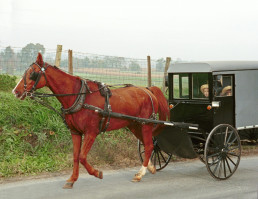
Many people think that the automobile brought on the death of the buggy whip manufacturer. Not true!
Buggy whip manufacturing still exists today. But it's safe to say the market for buggy whips isn't what it used to be.
Many people believed the internet would be the end of printed newspapers. Again, not true. Many fine newspapers still exist, although they are under increased pressure.
What do buggy whip manufacturers, newspapers, and your business all have in common?
They all must understand the business they are in.
Some argue that buggy whip manufacturers could have survived and thrived if they had noticed the changes and responded more quickly. But if they continued to believe they were in the buggy whip business they never could. The only way they could have made the transition would have been if they knew they were in the transportation initiation business. A buggy whip initiated the motion of the horse and buggy.
Buggy whip manufacturers are not needed unless you want to initiate transportation via horse and buggy. For buggy whip manufacturers to truly survive they would have needed to fundamentally change their focus of manufacturing to starters for internal combustion engines. This would have resulted in a new target market for their products. Nonetheless, buggy whip manufacturers could have survived had they focused on their core business of transportation initiation.
Newspapers are not needed without advertisers (with all apologies to fine reporting and information dispersion). Newspapers are more likely to survive and transition with the times because they recognize they are in the business of aggregating audiences for advertisers. The delivery of news and information is a by-product of the need to bring audiences together for advertisers.
According to Peter Drucker, "The purpose of a business is to create and keep a customer." I would argue that is only partially true. The actual purpose of a business is to create and keep the right customers. While newspapers create subscribers who are customers, they would be hard pressed to survive on subscribers alone. They bring together two groups of customers to create a value. Subscribers receive value from the information from the publication. The advertisers receive value from the exposure to the subscribers who are likely candidates for their products and services.
Regardless of the eventual outcome of the changes in the newspaper business, it is safe to say that many will survive and transition to a new model because they understand the business they are really in, aggregating an audience for advertisers. The subscriber base is essential to the advertisers and monetizing it is an added bonus.
What about your business? Are there ways to increase the value you bring to your "right customers" that would increase your business value? What is the real purpose of your business? Who are your "right customers"?
By answering these questions you can answer the ultimate question, "What business am I really in?" When you identify this core fact you'll be in a position to dominate your marketplace.


Who Wants To Be A Millionaire? Ask The Million Dollar Question
Asking questions skillfully and listening carefully can improve your networking and sales success. When you learn to ask The Million Dollar Question you can super-charge your results.
It’s called The Million Dollar Question because it can literally make you a millionaire. People from all walks of life find this one question to be so different from anything they have ever learned that they just can’t stop talking about the impact it has on their careers.
The Million Dollar Question cannot be asked as a stand alone question. It is used in the context of a conversation and only after a considerable amount of questioning skillfully and listening carefully. As your conversation continues, ask the person you're speaking with for their card and be ready to write notes on the back as you ask questions. Genuine interest is required to use the question wisely.
So what’s The Million Dollar Question?
“I’m in the public quite a bit, tell me (insert name), in the course of my day, how will I recognize a good prospect for you if I see one? (Yes, WOW is an appropriate response right now!)
You see, most people are so busy thinking about themselves and how they will benefit from this relationship that they fail to recognize that it is NOT about them, it is about the person they’re in front of. The person you are talking to will hesitate at first because this kind of question is so rarely asked. It shows you truly are interested in them.
Often people who are asked this question appear puzzled at first since they rarely come in contact with people who are genuinely interested in helping them. Do not despair. As you build your skill asking questions and listening to answers you’ll become adept at discovering ideal clients and prospects for the people you meet too.
Clearly you can see the benefit of asking The Million Dollar Question but remember that you must take care to record what you’ve learned. Be certain to record what you’ve learned about the person you just met on the business card you asked for earlier. While you don’t want to promise that you’ll be on the lookout for referrals, you will have implied that you are. And subconsciously your mind will go to work seeking a solution.
That’s it. While it seems simple it is rarely done and rarer still are those who do it regularly. If you do you will stand out from the crowd, be known as a caring connector, and people and resources will magically appear in your life.

Stand Out In The Crowd: Sponsoring Gives You Exposure - Hosting Gives You Access
If you are seeking a way to stand out from the crowd, perhaps no better opportunity exists than to host or sponsor an event that brings people together. Whether it's just an intimate group or a large crowd, hosting and sponsoring events provides excellent exposure, however there are significant risks as well.
Sponsoring an event is different from hosting an event. To sponsor an event usually means that you are providing financial or in-kind support of an event produced by others. A good example would be if you sponsored a local chamber of commerce luncheon. You could provide financial support that would assist in promoting the event or paying for the lunch for the attendees. Perhaps you could provide meeting space for a chamber mixer. Or you might provide the printed invitations to the annual dinner. In these examples, you would provide financial support either directly through cash payment or indirectly through in-kind service. Both are important to the success of the event and you would be recognized as a sponsor of the event. The chamber would do the rest.
Hosting an event is similar in that you would provide financial support through cash or in-kind service, but then you would also be producing the event. You would invite the attendees, coordinate the venue, food, parking, and all the other aspects of the event to ensure it's success. Hosting an event is not for the faint of heart but the rewards often can be greater. When hosting an event, you control who comes to the event since you have invited all the guests. You can create the atmosphere that works best for the attendees and for you. Done well, hosting an event can pay off in a big way.
Whether hosting or sponsoring, the exposure you and your company receive is invaluable. Most people assume that sponsor and host companies are better established, more financially sound, and therefore better able to serve customers and clients. Many companies use sponsorships to position their brand as a player in key markets that matter to them most.
A local bank is usually a big supporter of the local chamber of commerce while an energy or gas company may be a big supporter of green initiatives and programs. The key is to find the group of people you wish to influence and target them with your sponsorship. Often companies recognize that other organizations produce events better than they can and that they can gain influence through sponsorship of chambers and other cause centric groups.
Hosting events gives you the opportunity to reduce the target group to the key people you choose. While sponsorship provides exposure and the opportunity to influence, hosting provides the opportunity to interact. Often the cost of hosting an event is not much different than sponsoring an event, but the cost in hours of planning and executing can easily exceed the financial investment. Nonetheless, if you or your staff have the ability to host an event, your investment will be easier to track than it will be when sponsoring events.
Most people and companies begin by sponsoring events. This is a good place to start establishing your brand presence. You will get noticed and we highly recommend sponsoring events that are congruent with your company mission and that attract your target market.
But we can't urge you strongly enough to try hosting an event as well. Start with a goal that is small and easily managed. Perhaps you could invite six clients, prospects, or potential networking partners to a get together over coffee at your office. Start small and learn through the experience. Then expand your events to include more people, different formats, and different venues. You may find it easier to spread the responsibility by co-hosting with a few friends, partners, or vendors. And remember, vendors who sell you products that you ultimately sell to others are good prospects for sponsoring your hosted events. You will need to have a few successes under your belt before you will get vendor co-op dollars.
A bit of caution: While it does happen, rarely do people hold sponsors accountable when an event isn't a total success. But when you host an event you will be the sole party responsible for the experience of the attendee. If it goes well or if it goes poorly, you will receive the credit. So plan well. Additionally, people are becoming event-fatigued. Unless your event has a unique twist, you may have trouble succeeding. That's why putting a few people together that have a common interest is key. If you are unsure how to put the right people together or what to do to make the event appealing and different, we can help. Just email us.
Sponsoring the right event or series of events can put you in front of your target market in a way that no other advertising can but it is hard to measure. Hosting an event with the right invitees can position you and your company as the industry leader regardless of your experience. Remember, people do business with people they know, like, and trust. When they attend a well-run event that you have produced, they will get to know, like, and trust you much more quickly. Try sponsoring or hosting events to make your business grow.

The Elevator Speech - How to Ensure Your Message Is Heard in Any Crowd
Attend networking events and before long you will have the opportunity to introduce yourself to a crowd. While what you say is very important, how you say it will determine if your carefully crafted message (your Magical Networking Moment) will be heard. It's not as simple as speaking loudly enough to be heard.
Most people intuitively know that they must speak up in front of a crowd, especially in a large room without a microphone. But even the most seasoned speaker has limited experience with different acoustical characteristics. Flooring, ceiling material, furnishings, and wall coverings play a role in how well your voice will carry in a room.
A good rule of thumb is to remember that the harder the surface, the more your voice will carry and be reflected. You will need to speak louder in rooms with carpet, soft wall coverings, abundant plush seating, and textured ceiling tile since these materials will absorb sound. Conversely, you will speak softer and more slowly in a school cafeteria where you will find hard floors, chairs, tables, and ceiling materials since your voice will carry and even echo is some situations.
Regardless of venue, every event has its share of soft-spoken folks who fail to be heard. Here are a few tips to ensure that you will be heard every time you introduce yourself.
1. Get there early. If you arrive early you can test your voice in the room. This will ensure that you will be loud enough, but it will also ensure that you won't be too loud too.
2. Choose your seat carefully. Choose a seat near the front of the room or at least on the perimeter of the crowd. You don't want to have your back to anyone.
3. Be ready when it is your turn and stand up. Read my previous articles on Stand, Pause, Breathe, Lean Forward, and Speak Loud Enough to be Heard.
4. Slow down! Most people speak too fast and therefore do not enunciate properly. While you know exactly what you are talking about, the audience doesn't. Give the listener time to grasp what you are saying.
5. Remember that less is more. Give the audience only one or two points to remember. Chances are they will not remember much.
It is important to remember your goal. You want others to come up to you and ask for more information. You cannot and should not try to be all things to all people. If you carefully craft your message and deliver it with the proper volume and pace, you will find that you will attract all the right people. Following the tips above will ensure that the right people will hear you in every crowd.

Unclip Your Electronic Leash - Really Be Where You Are and Your Sales and Relationships Will Blossom
Do you want to see your sales soar, your relationships blossom, and your stress level decrease? Unclip your electronic leash. That's right, turn off your mobile phone or better yet, leave it in the car when you arrive at a business meeting, networking event, or dinner with a loved one. Before you immediately dismiss the idea, consider the following.
As hard as it may be to believe, back in the last century there was a time when no one had a mobile phone. No one had access to the current Tweets from their friends, texts from their co-workers or weather updates from the web. And people got along just fine.
Opportunity and outstanding situation marketing has driven us to believe that we should not (or cannot) function without our mobile device. We have been conditioned to believe that we are less effective, less connected, and less important without a mobile phone. And while recent studies indicate that people feel more stressed if they are without their mobile phone, these same studies indicate that the use of electronic communication is a tool to help people find "real world friends" (Keeping it real... 'Offline' communications still key to connecting with 'Digital Generation' DSSResources) . In essence, people use mobile phones to enhance, not create relationships that matter.
And in a relationship that matters, what behaviors do you exhibit? When you are with a premier client, do you answer your mobile phone or text to others? When sharing an intimate dinner with your mate, do you text to others or receive calls from friends? If you do, stop it now.
Aren't there times when you intuitively know that you should silence your phone or leave it behind? Would you answer your phone in a theatre? At the symphony? In the library? Society is changing its tolerance of mobile phones and the abusers who use them. The signs are everywhere. In banks, at retail check out counters, and at virtually every governmental agency, mobile phone use is no longer permitted.
The reasons are many, but the simplest explanation is that we no longer wish to be told we are less important than the person who isn't even here. When you answer a mobile phone call or text a friend in the presence of others, you are telling them that they are not as important as the people you want to connect with who aren't with you right now.
The biggest problem we have with mobile phones is they have become habitual. Just like yawning, when others look at their phones or are texting, we feel compelled to look or text too. Mobile phones are arguably the cigarettes of the new society. We unknowingly light them up by checking for texts, messages, and missed calls. For many, making a call the moment they get in the car has become a habit, just like lighting a cigarette was in the past.
Clearly there are times and circumstances where keeping your phone accessible is required. You wife is expecting a child, you are expecting an important call, or you work in a field where you are on call. The examples of acceptable reasons to keep your phone handy are as ubiquitous as phones themselves. But stop for a moment and ask, "Do I really need my phone right now?"
Try this test. Look back through your call and text log over the past day. How many calls and texts did you make and receive? How many of those calls and texts were crucial? How many were time sensitive? How many really mattered at that moment? You'll find that most of the interactions on your mobile device are brain candy. They keep you occupied. And occupied while with a significant client or loved one is distracted. You lose.
When you begin to focus on the people in front of you as much as you do your mobile device, you will begin to change the nature of your relationships. Better relationships are the source of more sales and less stress. Lose the leash.